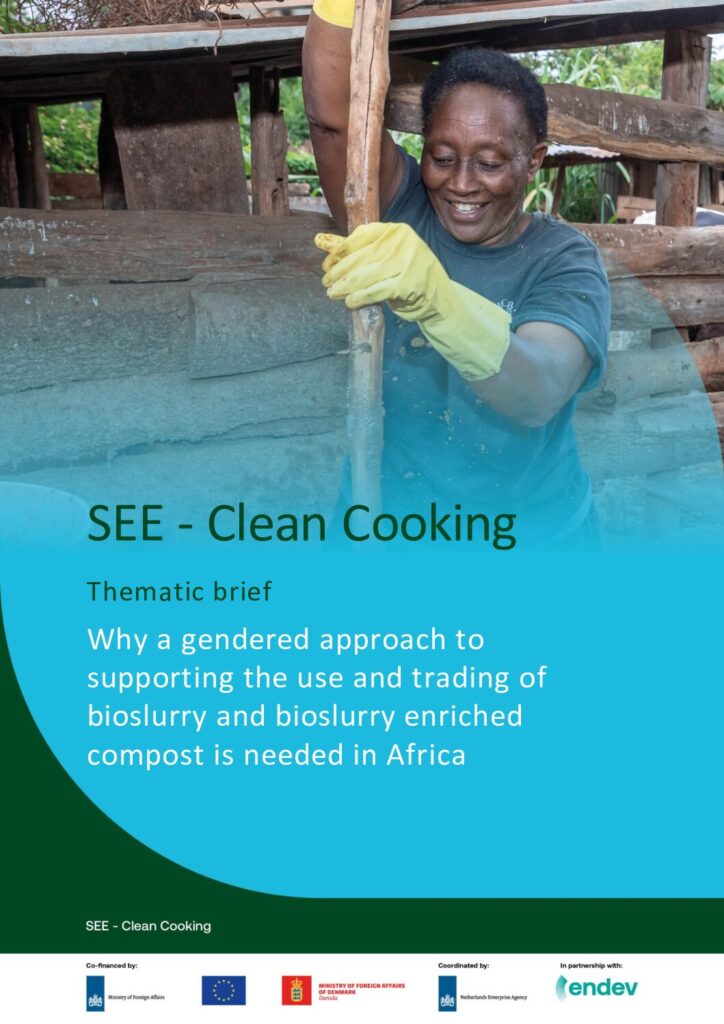


In Sub-Saharan Africa, women play a central role in managing household food, energy and water, often cultivating smaller and more degraded plots with limited access to inputs such as fertilizer, finance and markets. Rising fertilizer prices and declining soil quality further constrain their productivity and incomes. Locally produced organic fertilizers like bioslurry and bioslurry-enriched compost (BEC) offer a practical and affordable alternative that can help close this gap while strengthening circular, climate-smart food systems.
By supporting women’s participation in the production, use and trade of bioslurry and BEC, these solutions can improve farm outputs, create new income opportunities and advance cleaner energy access. This brief explores how a gender and social inclusion approach can enable women to benefit fully from these emerging value chains.