
Women Driving the Energy Transition and Climate Justice: Impact Assessment of Women’s Economic Empowerment
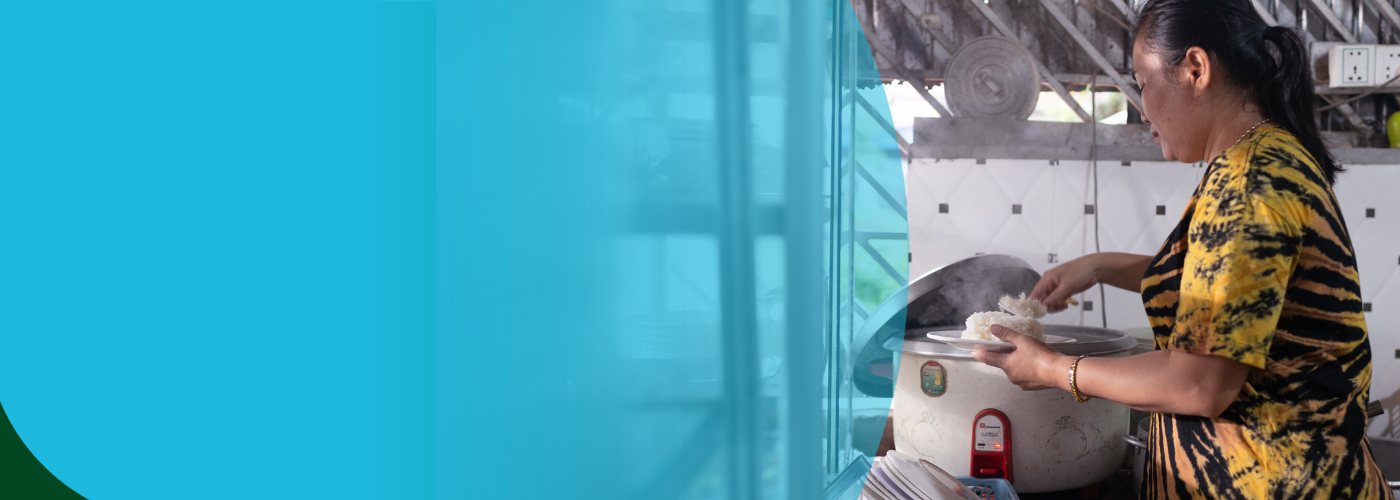
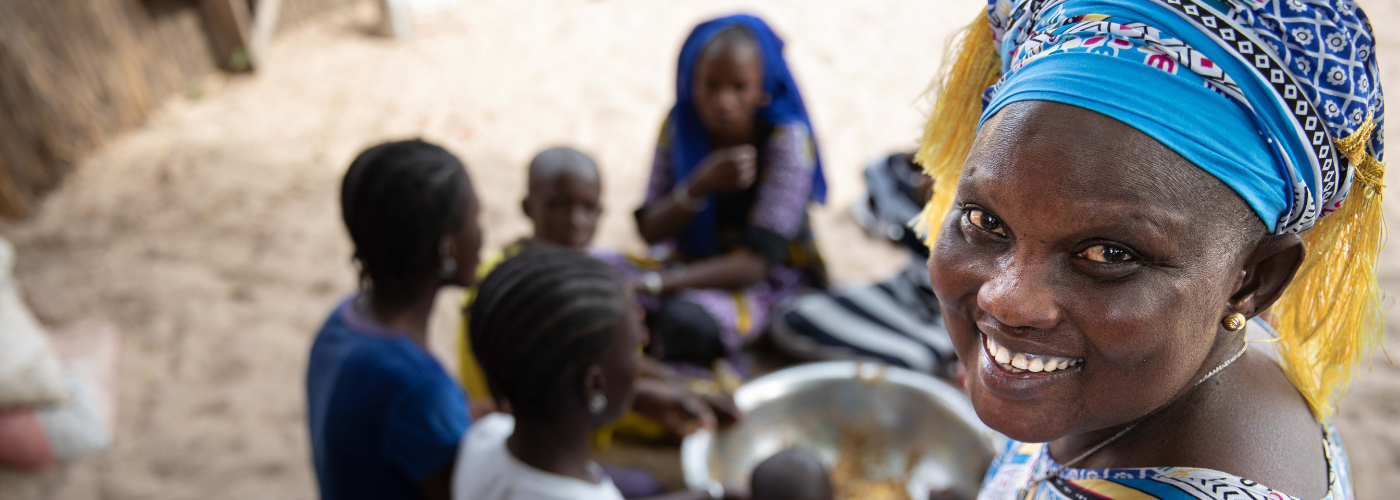
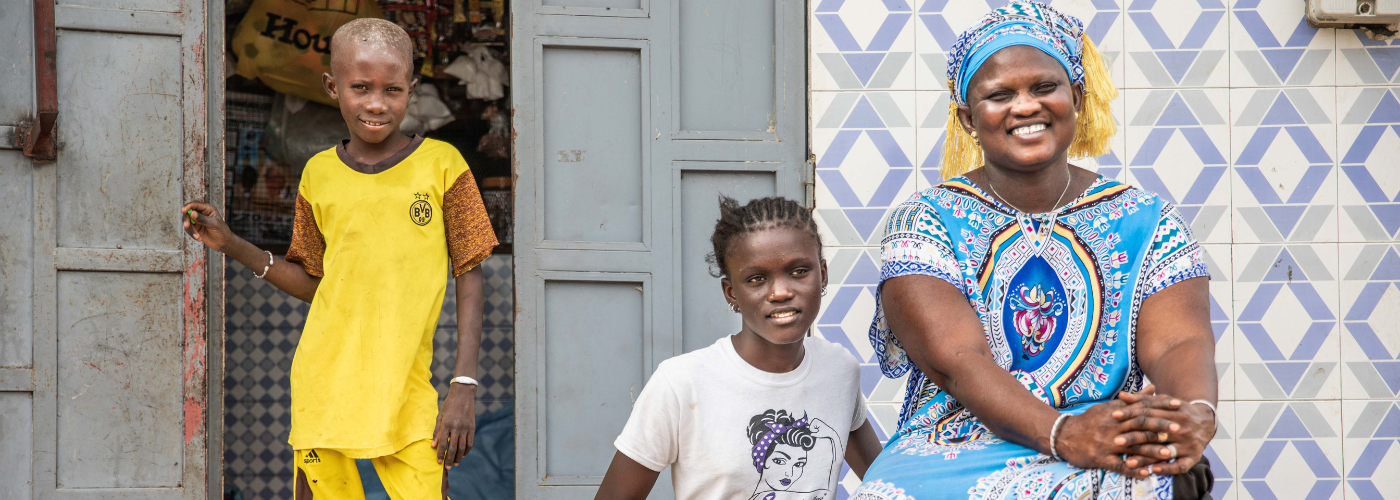
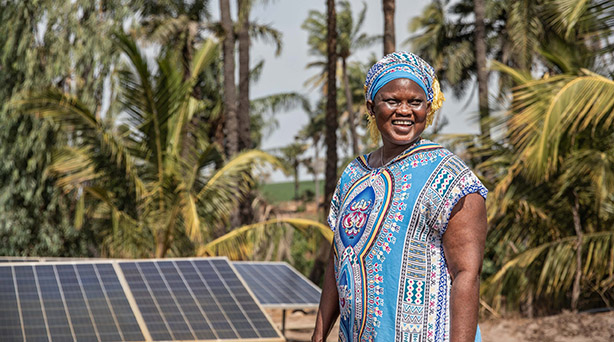
This Impact Assessment evaluates the economic empowerment of women entrepreneurs in the clean energy sector as a result of ENERGIA’s support, delivered via its partner organizations. The assessment focuses on determining how ENERGIA’s Phase 7 program has contributed to changes in the lives of women entrepreneurs, specifically in relation to decision-making, resilience, and business development.…
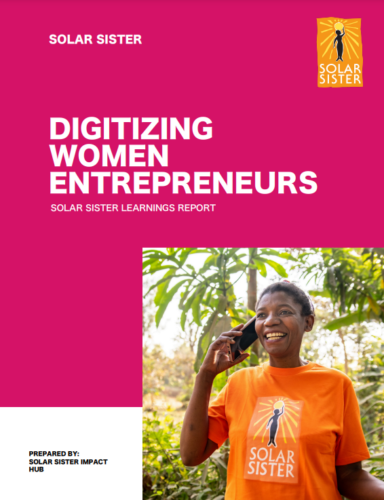
Digitizing Women Entrepreneurs
As the world becomes more digital, women are being left behind. According to reports from UN Women, the digital gender divide is particularly pronounced in developing regions, where women are 20% less likely than men to be online, and 30% less likely to have access to a smartphone. It is estimated that by 2030, 230…

Climate Resilience Project. Performance & Impact Report
Solar Sister’s network of more than 11,000 Solar Sister Entrepreneurs bring climate-resilient technologies to their communities while building a pathway to prosperity for themselves and their families through entrepreneurship. The communities Solar Sister works in often face immense barriers to accessing economic opportunities including gender disparity, economic and political instability, and climate disaster. Solar Sister…
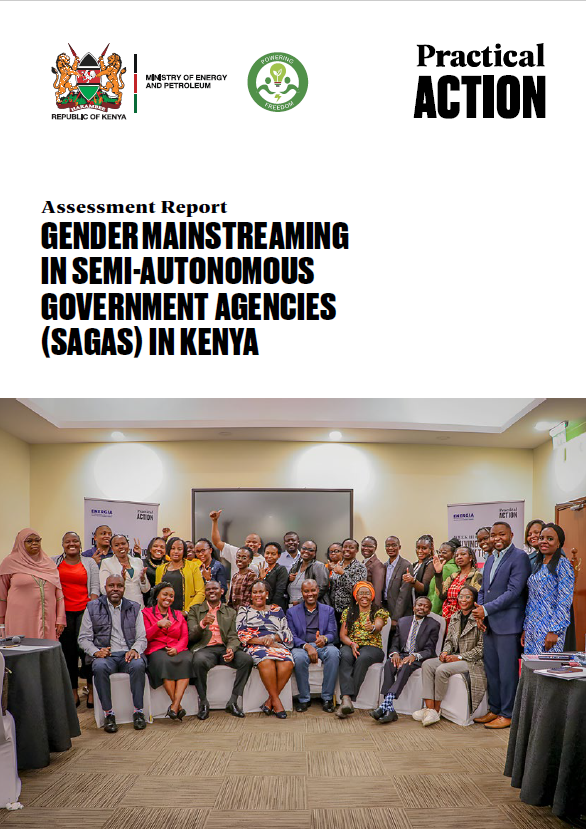
Assessment Report: Gender Mainstreaming in Semi-Autonomous Government Agencies (SAGAS) in Kenya
This report is an assessment of the extent to which the institutionalization of gender mainstreaming has been achieved. It also identifies the successes, challenges, and opportunities for further intervention. The report is divided into seven sections: Section 1 describes the background, context and objectives of the audit. Section 2 describes the methodology, including the inception…
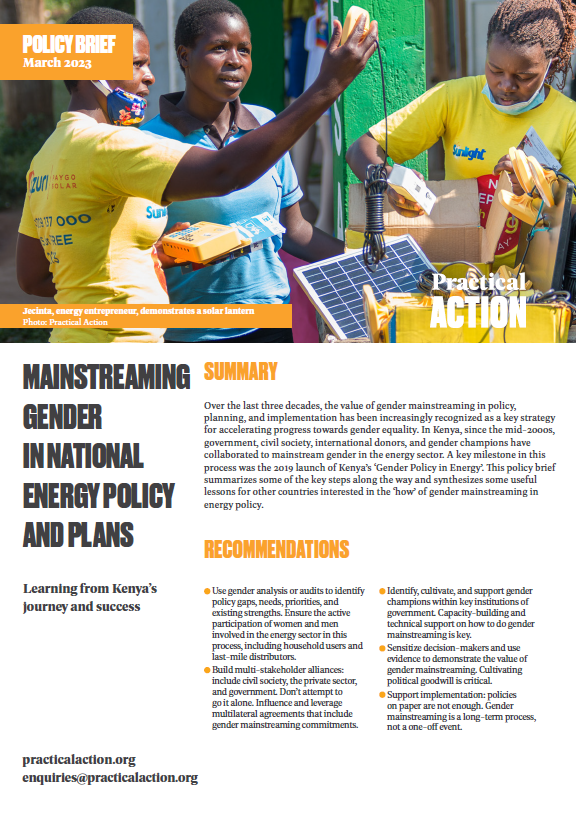
Mainstreaming Gender in National Energy Policy Plans
Over the last three decades, the value of gender mainstreaming in policy, planning, and implementation has been increasingly recognized as a key strategy for accelerating progress towards gender equality. In Kenya, since the mid-2000s, government, civil society, international donors, and gender champions have collaborated to mainstream gender in the energy sector. A key milestone in…
Policy brief on gender dimensions of energy access and clean cooking
This policy brief highlights how gender inequality shapes access to modern energy and clean cooking solutions, with women often bearing the greatest burden of energy poverty. It explores the social, economic, and health impacts of limited energy access on women and girls, while demonstrating how clean energy can improve livelihoods, wellbeing, and empowerment. Drawing on…
ENERGIA Phase 7 Strategy 2022 – 2026
As ENERGIA enters its seventh phase (2022-2026), this document presents ENERGIA’s Strategy for 2022–2026. This document, ENERGIA’s 2022-26 strategy, elaborates our vision for Phase 7 and serves as the fundamental guide for designing and implementing our strategies can activities.